Are We in a Dream?
Reporting by Zara and Elena (Year 8)
Is there any way you can be sure if you are dreaming right now? This is a conundrum that has occupied philosophers for thousands of years. In the 4th-century BCE, for instance, the Chinese philosopher Zhuangzi is said to have fallen asleep and dreamt he was a butterfly, but on waking found himself wondering whether he was now, in fact, a butterfly dreaming of being Zhuangzi.
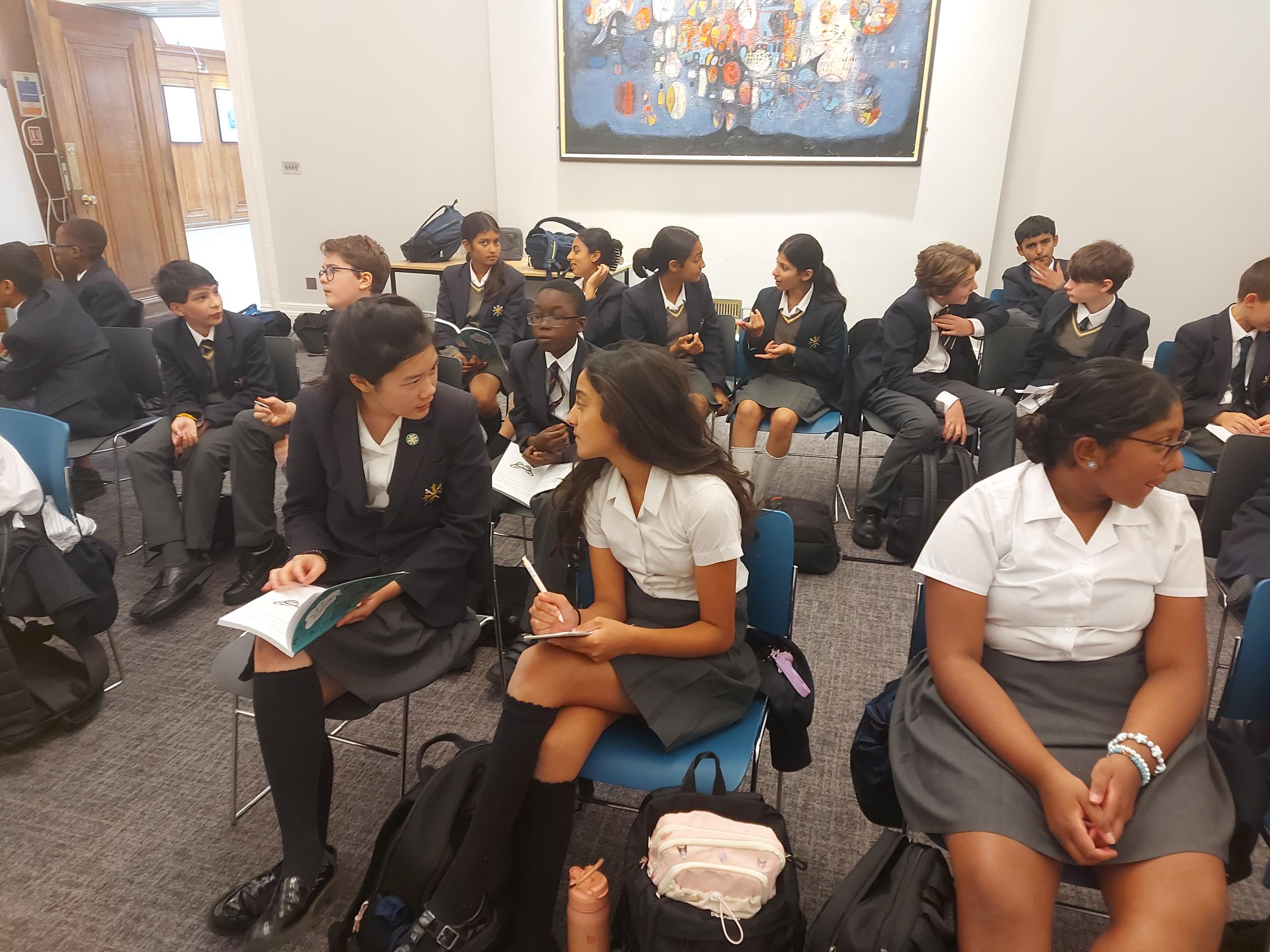
Year 8 scholars encountered Zhuangzi’s conundrum while reading Just Think by philosopher and author Philip West. This inspired a lively debate in which we explored whether we could truly know if we were dreaming. We discussed whether differences in time perception, the strange scenarios that are common in dreams and the reliving of waking events might give us clues.
We also read about the 17th-century French philosopher, scientist and mathematician Renée Descartes (who gave us the law of refraction, and the x and y axis). The very act of thinking or doubting one’s own existence, Descartes argued, must prove the existence of an entity capable of these thoughts, an idea he summed up in his famous statement ‘Cogito ergo sum’, meaning ‘I think, therefore I am.’ Descartes even speculated that there might be demons controlling us and we would never know.
The Year 8s left this meeting divided into ‘dreamers’ and ‘non- dreamers’, with no one quite certain one way or the other.