Beyond the Solstice
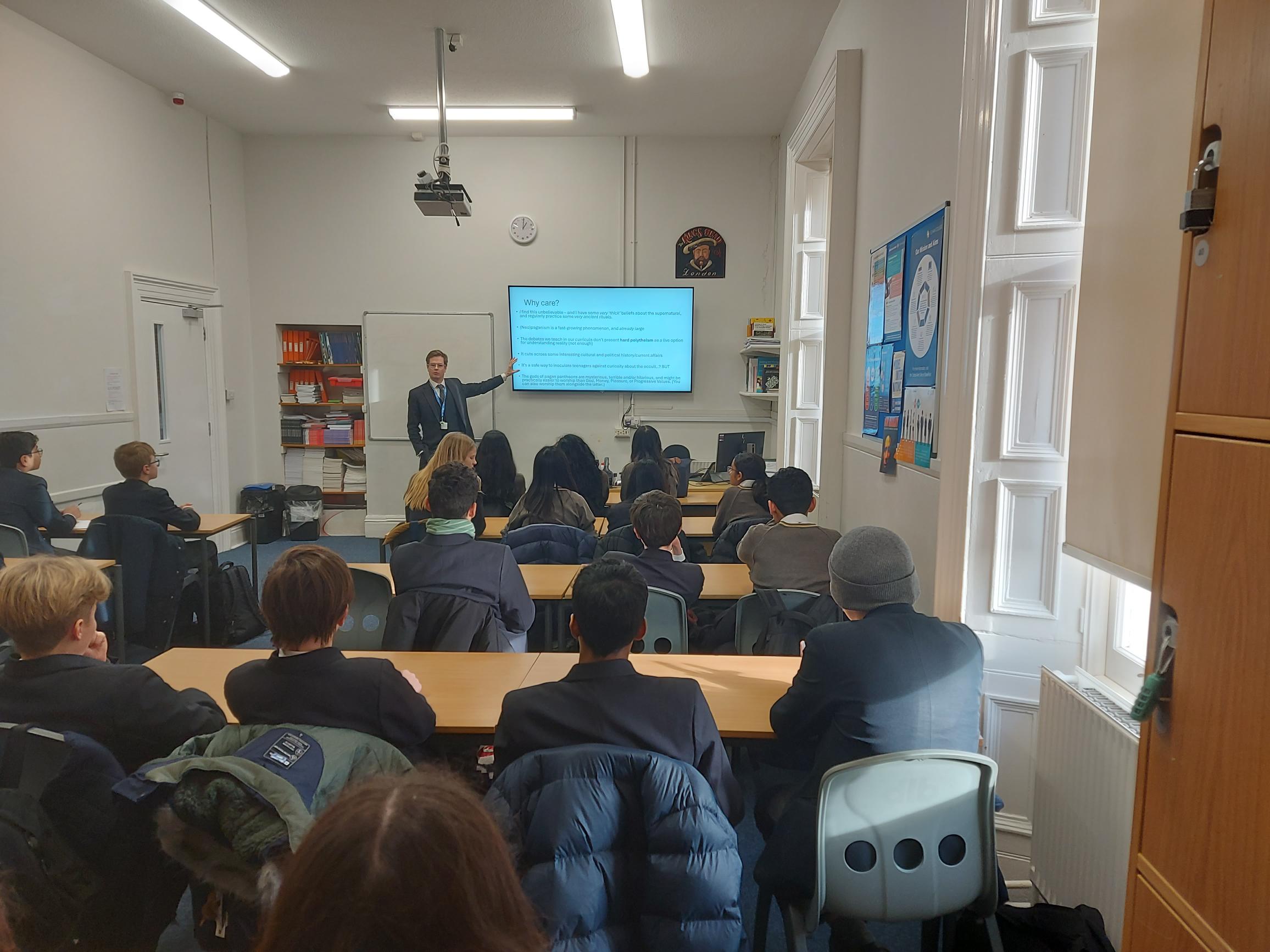
In a recent lecture to members of the Year 9 Athenaeum, Dr Hugh Burling, Head of Philosophy and Theology, considered the issue of paganism—or, perhaps more properly, neo-paganism—in the 21st century.
Beginning by noting the rise of neo-paganism in recent times, Dr Burling cited several reasons why examining it might be valuable, amongst them the reasons for that rise, its character as a polytheistic system of beliefs, and the ancient nature of many of its rituals.
The talk sought to answer four basic questions: What is “paganism”? Why is this a tricky question? How popular is (neo) paganism by self-identification? How much “traditional” paganism is there? Do (neo) pagans really believe the gods they worship literally exist? Dr Burling explored these with both detail and clarity.
The students were left with some follow-up questions about the philosophy of neo-paganism and the causes of its rise in adherence. For those who choose Philosophy and Theology at GCSE, the former question will be revisited in the curriculum.