Tropical Modernism
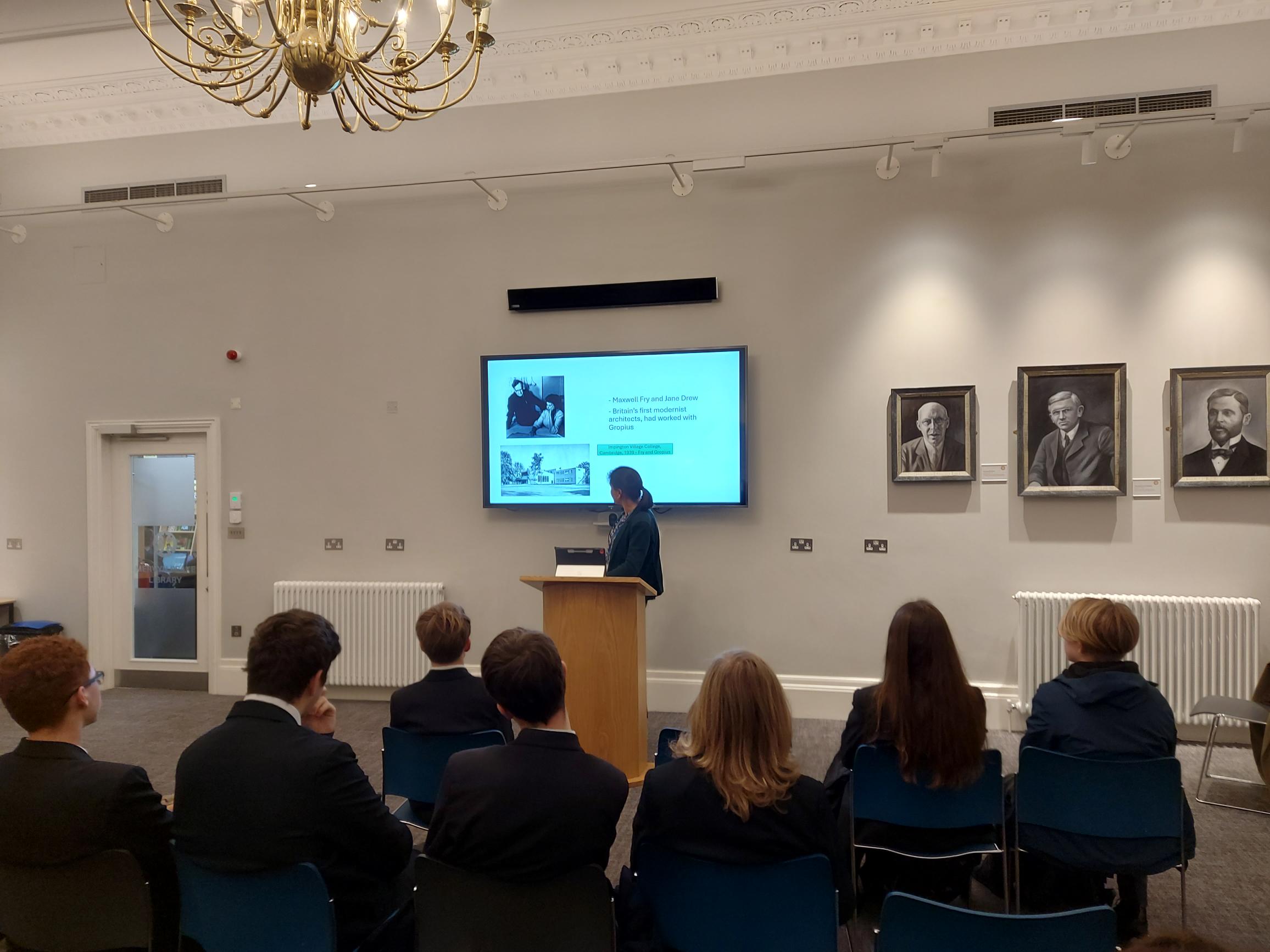
Following on from their introduction to Modernism last year, members of the Year 10 Athenaeum recently explored a particular feature of that movement – Tropical Modernism. Inspired by the exhibition on this theme at the V&A museum last year, French and German teacher Ms Keim delivered a presentation to the students.
The Tropical Modernism movement illustrates the danger of locating Modernism too narrowly, either geographically in Europe and America or chronologically in the 1920s and 30s. British architects exported Modernist ideas to Ghana in the 1940s and showed little regard for existing architectural practices. They adopted a colonialist approach when exporting European Modernist designs to Ghana. These ideas centred on the principle that form follows function, placing great emphasis on light, air, and temperature regulation in hot climates. Designs incorporated stylised versions of some indigenous motifs. The British architects called this new modernist style “Tropical Modernism”.
Ghana achieved independence in 1957 under the leadership of Kwame Nkrumah, becoming the first colony in sub-Saharan Africa to do so. What would be the response to the Modernist architecture that existed, a visible monument to colonial domination? Interestingly there was not a wholesale abandonment of the style. Nkrumah saw in “Tropical Modernism” a unique architectural style Ghana could use for nation-building, and local architects continued to design buildings following the principles of form following function and featuring motifs of indigenous design.
The presentation greatly enhanced the students’ understanding of Modernism and related themes.