Chi-Chi The Giant Panda: The Birth of a Political Animal
Chi-Chi is probably the most famous giant panda that has ever lived. At London Zoo from 1958 to 1972, she thrilled the British public and attracted the attention of the world’s media when she flew to Moscow in 1966 to hook up with a male, An-An, then the only other giant panda in captivity outside China.
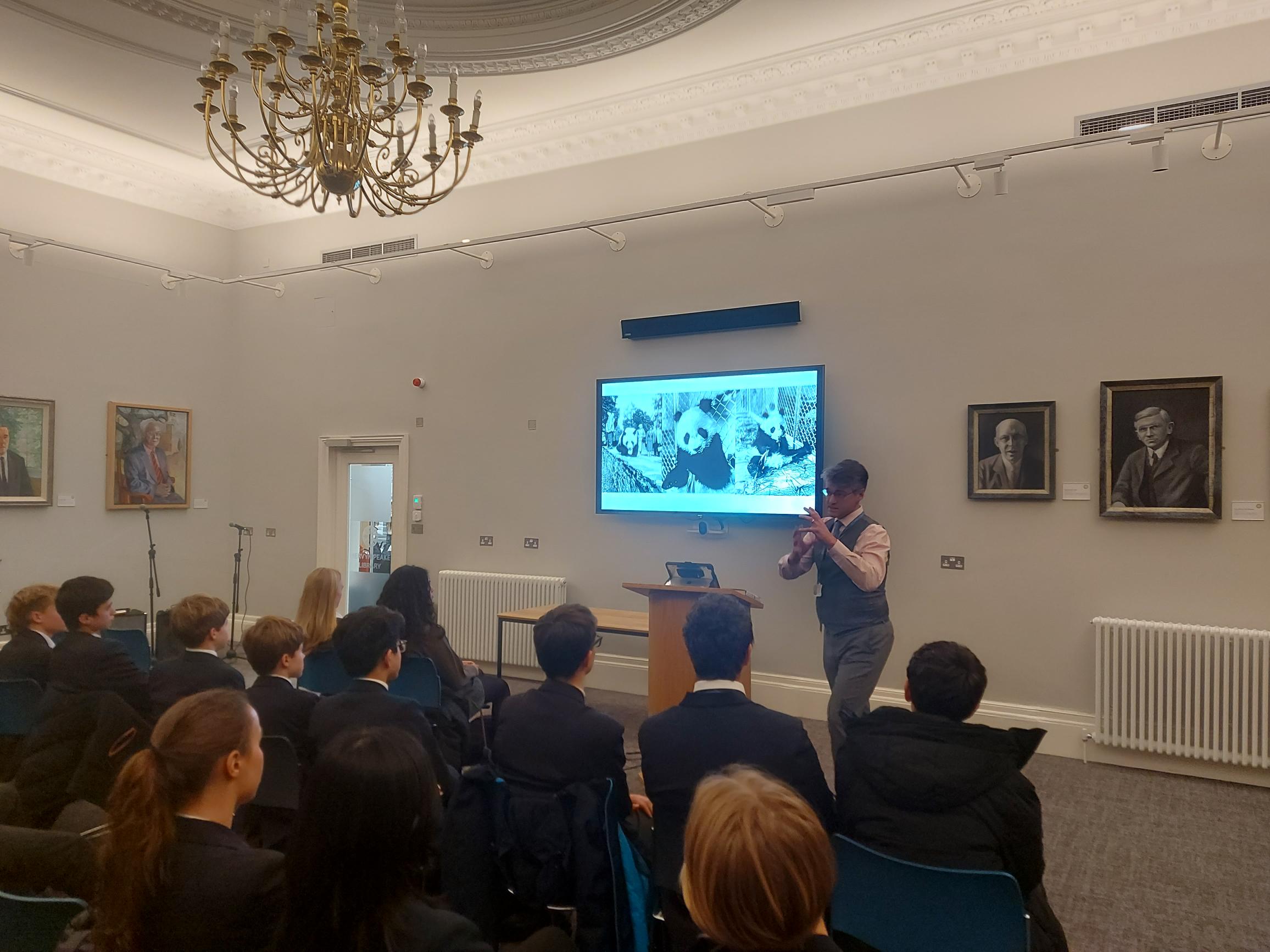
Although they never mated and Chi-Chi died without giving birth, she has left a considerable but confused legacy, as biology teacher Henry Nicholls outlined in a lunchtime talk to Year 10 scholars.
After Chi-Chi, many people could no longer see pandas as a serious product of evolution; no amount of evidence could dislodge the idea that this was a maladapted species, disinterested in reproduction, deserving of ridicule and inevitable extinction. For others, the giant panda came to symbolise a more enlightened view of the natural world and our efforts to conserve endangered species. Indeed, it was Chi-Chi’s popularity that switched the founders of the World Wildlife Fund onto the idea of using a panda as their logo in 1961, and the power of the giant panda to communicate the conservation message is as strong today as it was 65 years ago.
After her death in 1972, Chi-Chi’s body went to the Natural History Museum in South Kensington and can still be seen in the North Hall, her skeleton on the left and her taxidermised skin on the right of the archway that leads away from the cafeteria.