A Busy Week for Geography Co-Curricular
It has been a particularly busy week for the Eltham geographers, with students from Year 8 through to Year 13 getting out of the classroom and putting their geographical knowledge and skills into practice.
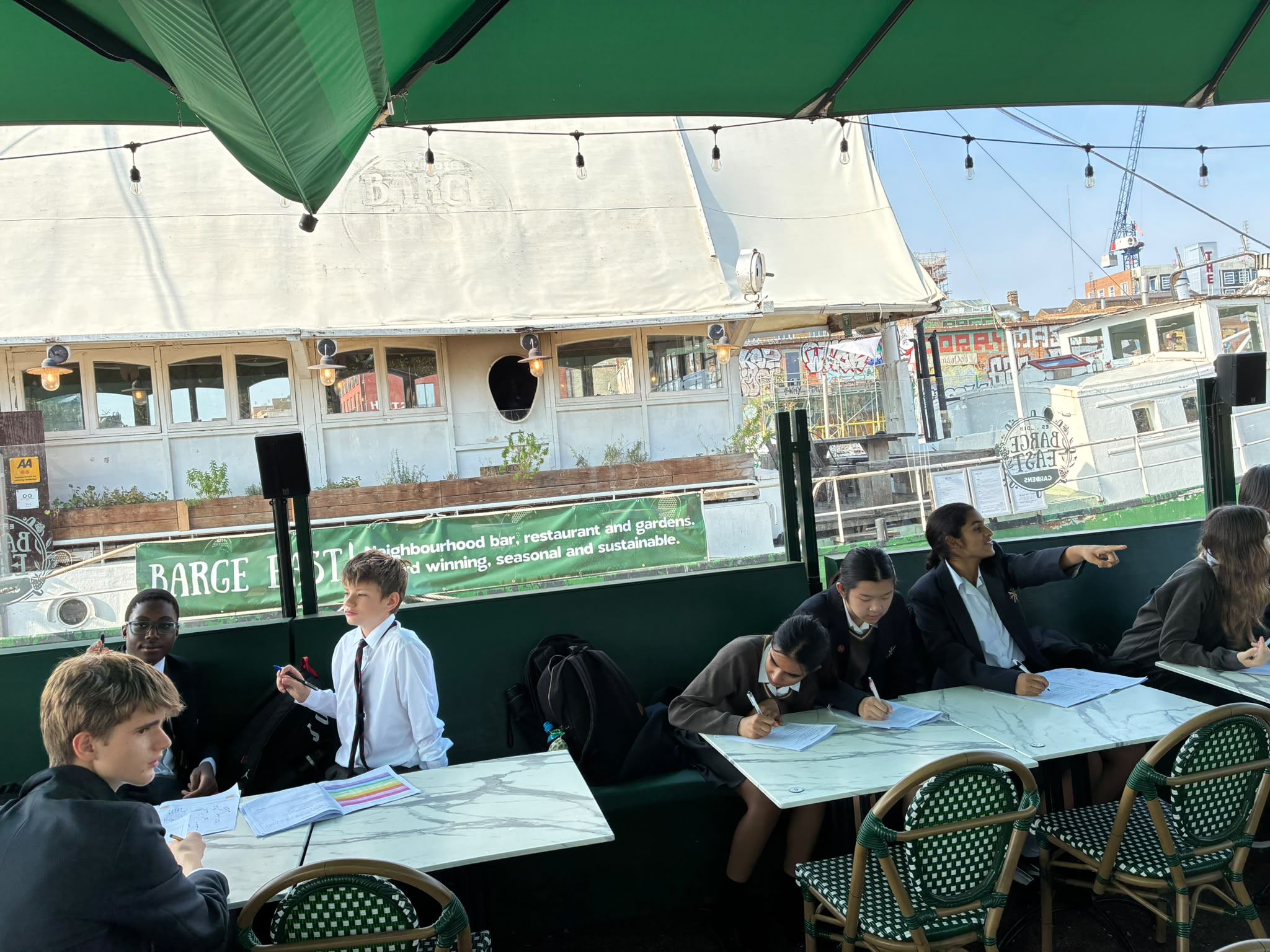
On Tuesday, all of Year 9 travelled to Stratford in East London to investigate Transport for London’s Healthy Streets concept. Students tested different aspects of the Healthy Streets model by collecting a wide range of primary data, including pedestrian counts, land-use surveys, non-participant observations and, of course, questionnaires – a particular highlight for many students! Some managed to ask more than ten members of the public for their opinions. These practical fieldwork skills are valuable far beyond Geography: making observations, collecting reliable data, working collaboratively and confidently speaking to members of the public are all important skills. Several members of the public who regularly use the Olympic site commented on how lovely and polite our students were and congratulated them on their excellent work ethic, a fantastic reflection on our Year 9 geographers.
Meanwhile, our Year 8 geographers have been undertaking fieldwork on site to investigate microclimates, using equipment including anemometers and light meters to identify areas of the school experiencing the most extreme conditions. It has been particularly pleasing to see students developing their group work and decision-making skills as they plan and carry out their investigations. 8HJC even experienced the weather changing dramatically during their fieldwork, as a weather front passed over at the end of their lesson. Having gone from sunshine to heavy rain, they hurried back to the classroom, protecting their equipment and fieldwork booklets under their uniforms, only to look back out onto the quad and see the sunshine return!
Finally, nearly 30 A Level geographers travelled to the Royal Geographical Society in South Kensington, the home of Geography, for the Michaelmas Term student lecture. Professor Gerd Masselink presented his latest research into the Slapton Sands barrier system and Slapton Ley in Start Bay, an iconic coastal landscape in Devon. The lecture explored the dynamic nature of the barrier, including the impacts of sea-level rise, longshore sediment redistribution and storm events, as well as the difficult decisions surrounding coastal management following damage caused by the February 2026 storms. This was an excellent opportunity for our students to deepen their understanding of coastal processes and management, providing a real-world case study for their Coasts topic.
Mrs Mollison, our Head of Geography, is also a volunteer on the Geographical Association’s national Fieldwork and Outdoor Learning Group and says: “Experiencing Geography beyond the classroom is such an important part of understanding the subject. Whether students are investigating microclimates in our own school grounds, collecting data in the streets of London or hearing directly from leading geographical researchers, these experiences bring geographical ideas to life. We are incredibly fortunate to have so many opportunities on our doorstep in London, and we make the most of them wherever we can. Next week, for example, Year 7 will be undertaking fieldwork in Mottingham. That said, the Geography Department is equally excited to be heading to Iceland in just a couple of weeks, the land of ice and fire, where our GCSE geographers will have the opportunity to experience some truly spectacular physical geography first-hand!”