Clock This
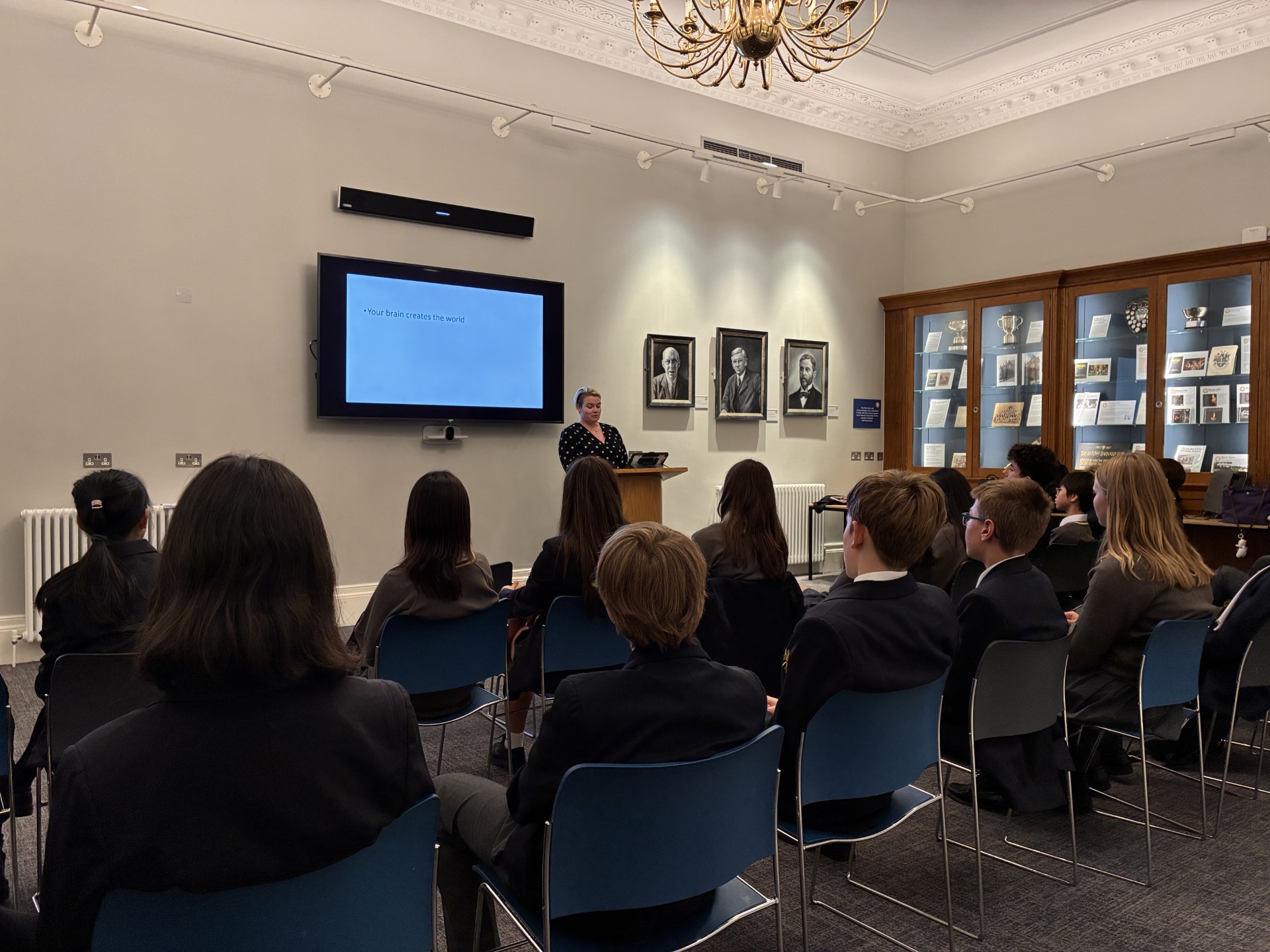
Ms Pokorny, following on from a talk by the Head of Psychology, delivered a Year 10 Athenaeum session that explored how our ability to process or recall something readily relies on our previous experiences and expectations about the world (schema, which are brilliant for memory short cuts and so that we don’t become overwhelmed). However not being aware of this can lead to rigid and biased thinking.
The session began with some remarkable facts about the brain: 100 billion neurons; up to 10 trillion connections; over 60,000 miles of nerve fibre, and all running on about 25 watts – the same as a lightbulb.
The students then became the subject of an experiment. Split into two groups, they were each shown a carriage clock and asked to draw it. One group was sat facing the clock and the other group was facing away from it. The results from both groups revealed how readily we draw what we expect to see rather than what is actually in front of us.
This led to the key idea of the session, schema: the mental frameworks we build up about the world. They let us make sense of new information quickly, and take shortcuts, but they can mislead us. Ms Pokorny illustrated this too with social media responses to footballers’ pocket-watch tattoos.
Ms Pokorny closed with three final thoughts: your brain is incredible but fallible; it is valuable, so take care of it; and make the most of where you are now as teenagers, because learning gets harder as we get older