How to Analyse a Piece of Text
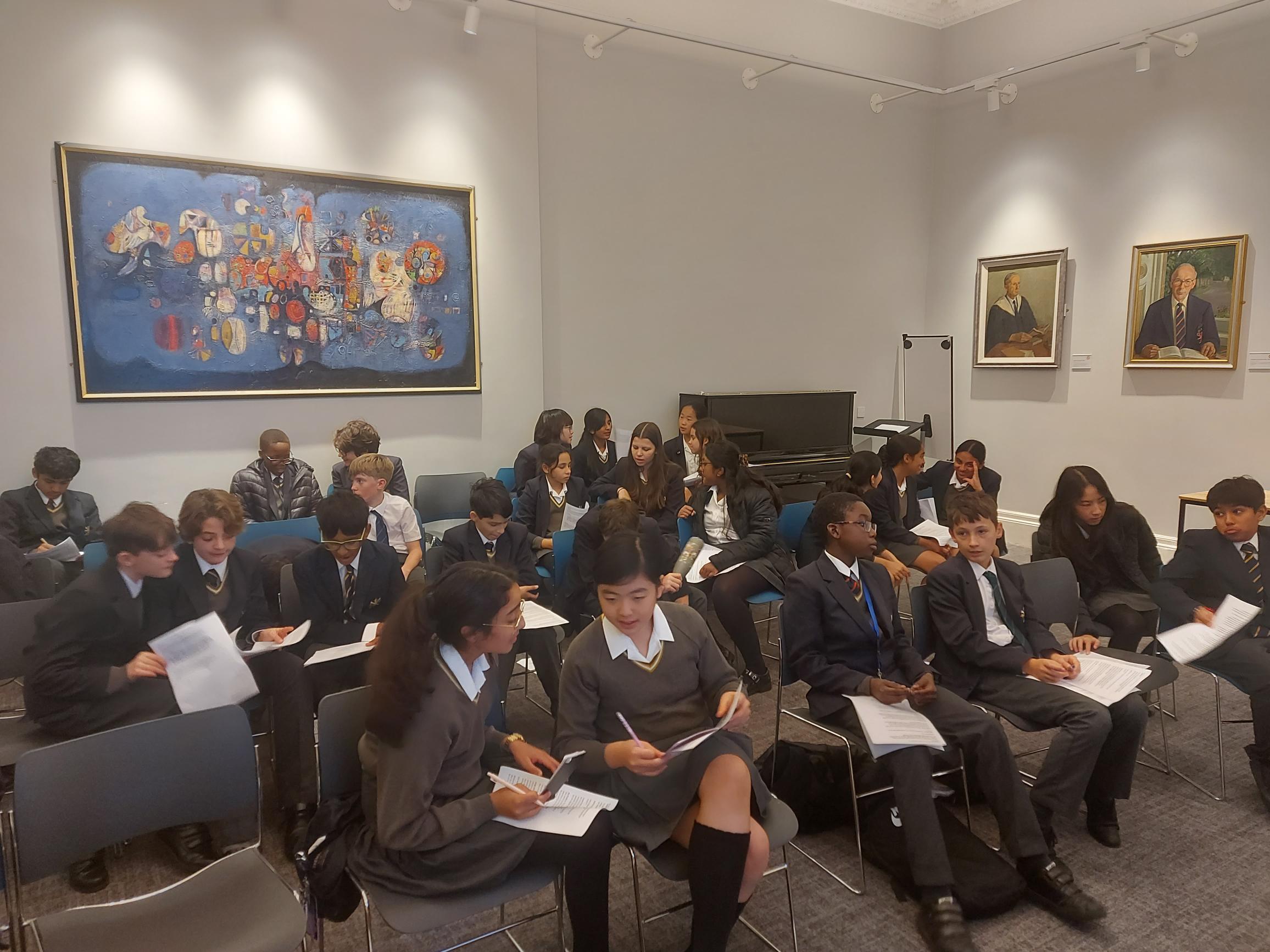
“If I presented you with a historical source, what questions would you ask about it?” This was how history teacher and head of the Scholarship programme Mr Cavendish introduced the latest workshop for Year 8 students.
The five key questions, Mr Cavendish suggested, are:
· Who wrote it?
· What does it say?
· What language was it written in?
· When was it written?
· Why was it written?
These are very important things to think about when analysing a historical source. But what about novels?
The questions to ask about a novel are similar to those one might ask about a historical source. However, Mr Cavendish added one more key question: “Do we need to know about the biography of the author and their intentions?” We looked at three texts offering different perspectives on this question: first, some students discussing the famous horror story Frankenstein by Mary Shelley and thinking about the future; second, a critic examining the poetry of Emily Dickinson and focusing on her personal life; and third, a survey of several leading novelists about the role of symbolism in their work. Interestingly, on the last one, all the authors said that although they didn’t really add symbolism consciously, it was extremely difficult not to incorporate some form of deeper references inside their texts.
This exercise helped us to appreciate the importance of approaching the intentions of the author from many different perspectives.
Structuralism or Symbolism?
On a Thursday, the Year 8 academic scholars were puzzled by our new interesting topic.
‘If we were having a history lesson,’ Mr Cavendish started, ‘and I have presented you with a source, what questions would you ask about the source?’
And of course, all students raised their hands diligently, and answered with: ‘Who wrote it’, ‘what does it say?’, ‘what language was it written in?’, ‘when was it written?’ and ‘why was it written?’
So now, he asked, ‘what questions do we ask for a novel?’
In order to explore this further, we considered three documents. The first was a report written by school students on their views of Mary Shelley’s Frankenstein. They said it was like ‘stem cell research, ahead of its time’ and ‘writing about new scientific frontiers’, even though Shelley could not have known how science would unfold over the next two centuries.
In the second document, the author considered the work of Emily Dickinson, arguing that she connected her life to her poetry and could see all the elements of her lifestyle, family and personality reflected in her poems.
Document 3 consisted of letters between a PhD student and various famous 20th century authors. When asked if they planned the symbolism in their writing, there were mixed responses. Some did so consciously, some unconsciously and others, like Jack Kerouac, Issac Asimov, Joseph Heller and Ray Bradbury, claimed they did not include hidden meanings, but left their readers to find them.
Structuralism, as Mr Cavendish explained, is an argument against theoretical interpretation of what an author intends to input into a story, and in this case, the meaning of many elements. Roland Barthes claimed that it was a ‘waste of time to analyse the author’s life to find the meaning within a book itself.’ Structuralism is overcomplicating a simple story by looking for symbolism in the writing.
So, the real question is: when analysing texts, should we look for symbolism or base answers on structuralism?