Moors, Mines, Making, Moulding, Manufacturing and Mission
The members of the Year 9 Athenaeum have just returned from their residential scholarship visit to West Yorkshire. The aim of the scholarship programme is to think across subjects and hopefully beyond them and to stimulate the students’ curiosity and imagination; this visit certainly did that. Beginning at the Yorkshire Sculpture Park, they not only examined the works of well-known artists such as Barbara Hepworth and Henry Moore but also undertook a variety of practical activities exploring the nature of sculpture. Having to retreat indoors towards the end of the afternoon due to the rain, the students had the chance to see the work of the South African artist William Kentridge. His film based around the life of Russian composer Dmitiri Shostakoviich, called “Oh to believe in another world”, was a dynamic collage of music, archive footage, photos and animation set during the early days of the Soviet Union.
This year they were staying again in Malham in the Yorkshire Dales. Although involving a little more travel, the scenery was magnificent and the hostel first rate.
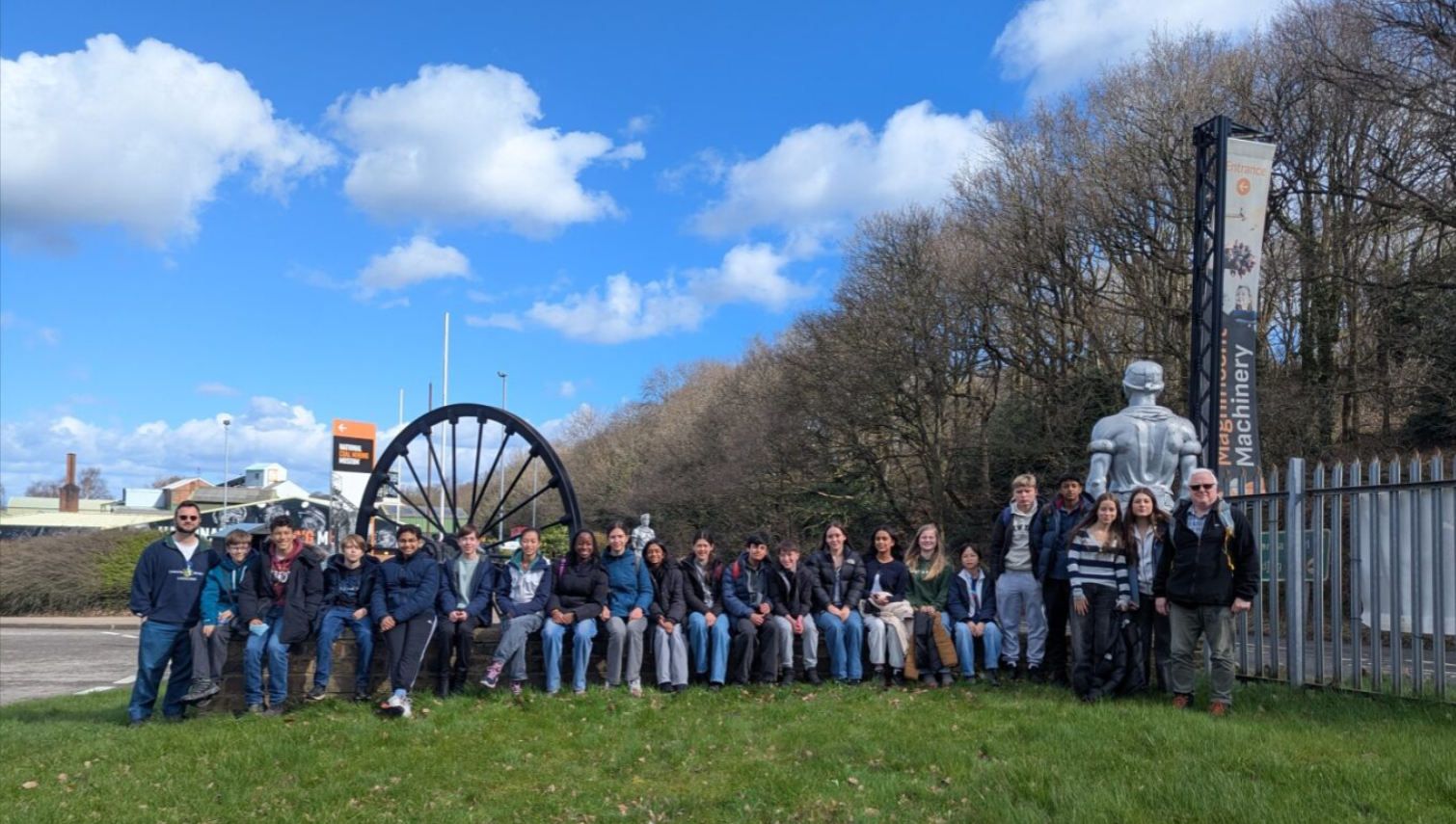
The next very full day involved a morning in the Royal Armouries in Leeds with a viewing of an adjacent lock and an enlightening exposition of the development of the musket to the rifle. Then on to Wakefield, to the National Mining Museum and the chance to go underground. The tours, led by ex-miners, provided so many insights for the students into the technical and physical challenges of mining, the issues around child labour, the importance of the coal and above ground a most informative exhibition told of the social history of mining and its relatively recent demise.
In the afternoon sunshine, the group explored the model village of Saltaire and looked at the wide variety of provision laid on for the mill workers by Sir Titus Salt: houses, educational institutes, a dining hall, a church, a village hall and a park! They thought about philanthropy, paternalism and examining Sir Titus’ statue, how things are commemorated. The main mill building now contains a gallery housing on of the biggest collections of David Hockney’s work, which the students much enjoyed.
On our last day, a morning exploring the Brontë Parsonage was followed by a guided tour of Howarth and a walk onto the moors, with views across the Worth Valley. Our guide expertly explained the importance of the landscape and read from the works of the Brontë sisters as we stood on the windswept hills — this year was the most windswept we have ever been. Building on work done about the importance of landscape in the novels of the Brontë sisters, the students also considered the importance, or not, of understanding the biographies of authors in order to appreciate their work. The museum also had an exhibition focussing on the films made about Wuthering Heights, in light of the recent release, and an excellent display about the colonial backdrop to the Brontës’ work.
So much was included in a short visit and much of its success was due to the work done by teachers in preparatory sessions before the visit and the engagement of the students whilst on the trip. Hopefully the visit provided interesting insights and experiences but even more opened minds to the possibility of exploration and investigation into things for its own sake and to see how many themes in one subject area are echoed in another.
Student Insights
“Looking back, Yorkshire was so much more than just a trip; it was a chance to better understand myself, the people and the environments around me. I learnt about history within Yorkshire and the surrounding area including trips to the National Coal Mining Museum as well as the Royal Armouries in Leeds; these experiences enabled me to learn further about things we have previously studied at school, providing a detailed insight and deepening knowledge beyond the classroom. Overall, I thoroughly enjoyed the trip and the experiences it gave me. We left with smiles on our faces and having learnt a lot more about the rich culture of English history. Thank you to all the staff and students who made it such an amazing trip!” — Isabelle (Year 9)
“On the 13th of March, the Year 9 Athenaeum, along with Mr Cavendish, Mr Chapman and Ms Powis-Holt, went on a trip to Yorkshire. On the first day of the trip, the group visited the Yorkshire sculpture park — a 500-acre open air art gallery with work by Barbara Hepworth and Henry Moore. The Athenaeum enjoyed a guided tour of a small part of the park and got to learn about how the sculptures relate to their surroundings and had a go at sculpture making themselves. After this enjoyable visit to this beautiful open-air gallery, the Athenaeum made their way to the beautiful village of Malham, where they were staying.
The next morning, the Athenaeum were up early, and paid an early morning visit to the Royal Armouries, where they got to see many interesting artifacts such as the armour of King Henry VIII, the hall of steel — a massive spiral staircase displaying over 2500 artefacts from the 17th and 19th centuries and more modern artifacts, including guns and shells from both world wars. On top of this, the scholars got to hear a talk about how the making of the gun has progressed over time from the inaccurate muskets to the more modern assault rifles of the 20th century, and they had a go at feeling how the weight and size of these guns have changed over time. After this, the Athenaeum visited the National Coal Mining Museum and got to learn about the rise and fall of coal mining in the UK and were able to go down a mining tunnel, to understand what the working conditions were like over the ages. Finally, the students visited Saltaire, the model village created by the wealthy mill owner Sir Titus Salt in the 19th century-whilst enjoying ice creams. They got to learn about the way that the village was designed and had time to explore the art gallery which currently resides in Salt’s mill and displays work by David Hockney. Finally, weary after the long day, the group returned to Malham.
On the third and final day, the group visited Haworth, where they went to the Brontë Parsonage — a museum dedicated to the Brontë sisters, who spent much of their life either in that building or the surrounding moors, of which the Athenaeum got a guided tour. The group then learnt about how life would have been in Haworth whilst the Brontë sisters were alive, and what their day-to-day life would be like. After this, the group got to explore central Haworth for themselves and enjoy the quaint old English sweetshop and tea rooms, before heading back to the school.
Overall, the trip was a very enjoyable and informative outing, showing the scholars what Yorkshire would have been like throughout the past, and how it has been influenced over the ages.” — Aadi (Year 9)