The Mystery of Museums
Members of the Year 9 and 10 Athenaeum have recently visited the Prince Philip Maritime Collections Centre in Kidbrooke and the National Maritime Museum in Greenwich. The Prince Philip Centre, which opened in 2018, gave the students a fascinating insight into the world behind the scenes of a museum. Following a group exercise considering all the many and varied roles of those working at the Centre, they had a tour of the facility, exploring how artefacts are evaluated, stored, photographed and maintained. One of the highlights was seeing how fragile items are stored, most noticeably a flag captured from the Spanish warship San Ildefonso, which was originally displayed during Nelson’s state funeral at St Paul’s in 1806.
The visit to the Maritime Museum allowed the students to build on work done by Head of History Dr Davies in last week’s session about how perceptions of the past are constantly shifting in the light both of new evidence and, particularly, concerns about how many versions of the past are selective and misrepresentative. Using the very live issue of the history of British imperialism, he showed the significant changes in view since the 1950s and the real sense in which history is a dialogue between the present and the past.
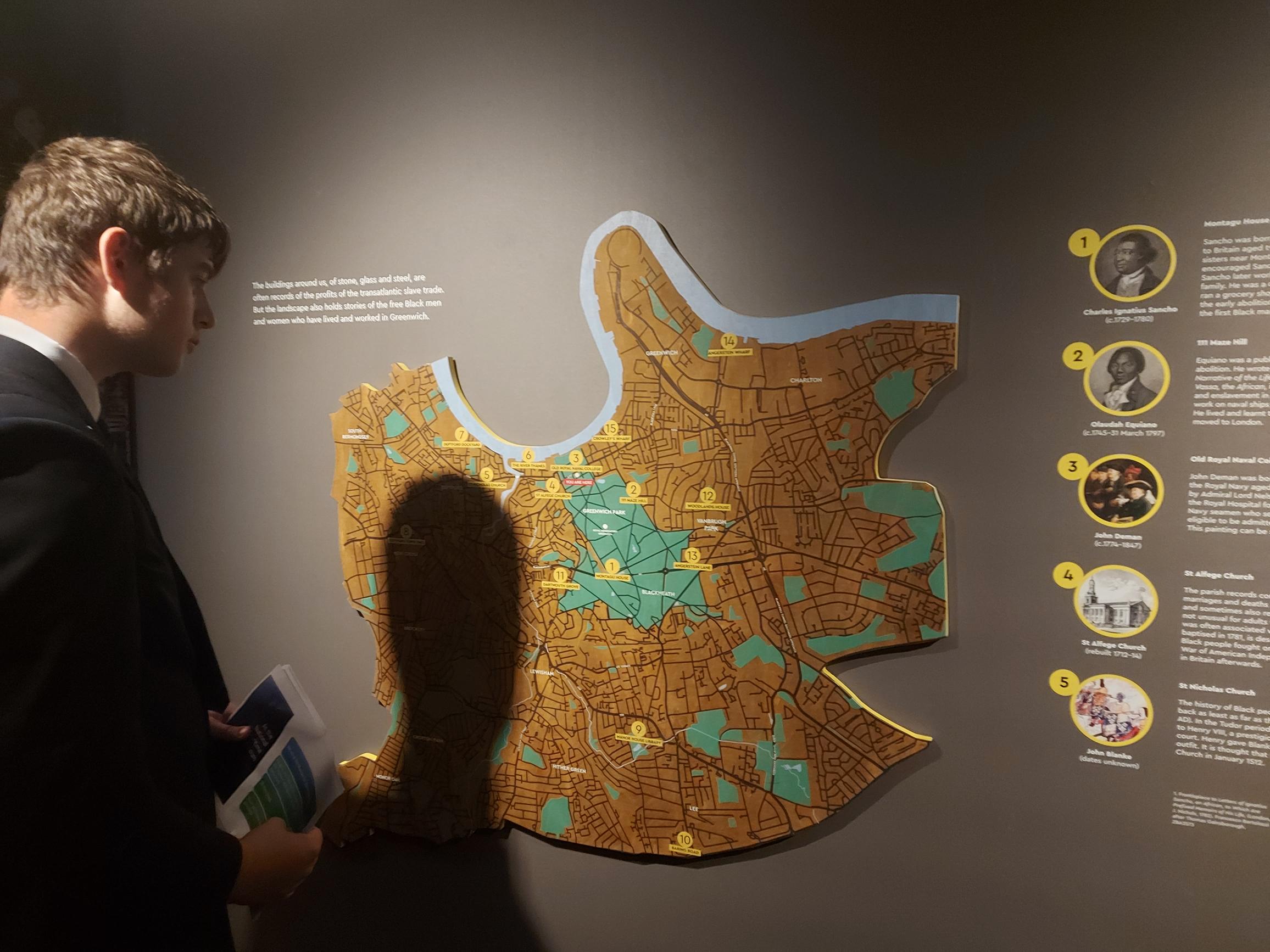
As the students explored the Maritime Museum, they were given visible evidence of the process mentioned above, as the gallery on the Atlantic, which deals with the trade in enslaved people, had a message next to the exhibition saying “work in progress”. An information panel then explained how this display (only created in 2007) “…no longer reflects the approaches or ambitions of the National Maritime Museum.” The students explored the Museum not only to study the exhibits but to think about how museums operate: why do they include what they do, are they presenting a particular narrative, to what extent do they shape or reflect opinion?
In the spirit of the Scholarship Programme, the day encouraged students to think across many disciplines and to constantly question and look “behind the scenes.”
Student Insights
On the 2nd of June, a small group of academic scholars from Years 9 and 10 had the opportunity to immerse themselves in the question, ‘What are museums for?’ Throughout the day, we went to Greenwich Park, the Prince Philip Maritime Collections Centre, as well as the National Maritime Museum. We learned about conservation and restoration efforts, along with the collaborative work of the many professionals involved in curating and shaping museum exhibitions. This provided valuable insight into the care, planning and attention to detail required to create the engaging and informative experiences that visitors ultimately encounter. The day was full of insightful learning, and we were fortunate to see numerous artworks at the Prince Philip Maritime Collections Centre up close, giving us a greater appreciation of the skill, effort and craftsmanship that goes into creating and preserving these pieces for many more people to see.
—Izzy (Year 9)
My visit to the Prince Philip Maritime Collections Centre and the National Maritime Museum left me genuinely impressed by both the scale and the accessibility of Britain’s maritime heritage. The Collections Centre, in particular, felt like a hidden treasure trove: a vast, carefully cared-for body of artwork that many people simply don’t realise exists. With over 4,000 maritime works, including works by J.M.W. Turner and Thomas Gainsborough, it made clear that maritime history isn’t a niche within British art, but a central and rich tradition.
The National Maritime Museum brought history even closer to the present. Standing near the immense 10 by 14.5 metre Spanish naval ensign captured at the 1805 Battle of Trafalgar felt like having English history within arm’s reach: not just reading about the events, but encountering the physical object, a national memory, that passed through them.
I also appreciated a curious and very democratic fact about the museum archives: as a UK citizen, anyone can request access to artefacts, manuscripts and ship plans. The request must be honoured within 12 days, which makes the collection not just prestigious but genuinely reachable.
—Zayd (Year 10)
Going on the trip to Greenwich to learn about museums was great. We got to see behind the scenes of the Maritime Museum and learnt about the techniques of preservation and the number of jobs that come from a museum. At the Maritime Museum, we saw three distinct exhibits and learnt about how views of history have changed over time. At the end of the day, the trip was very eye-opening and fun.
—Ethan (Year 10)
We started the day travelling by coach to Greenwich Park, where we saw a statue of James Wolfe and a rainy but picturesque view of the Queen’s House and the rest of Greenwich. We then made our way to the Prince Philip Maritime Collections Centre, where we had a look at some of the artefacts being stored and preserved. We also had a chance to meet a few people who helped with the artefact preservation and conservation process, allowing us to gain a better insight into the behind-the-scenes work of museums, exhibitions and how they operate. After eating lunch, we spent the afternoon in the National Maritime Museum, where we looked at exhibitions about the history of the Arctic, the transatlantic slave trade and the history of the East India Company. These exhibits allowed us to delve into the past maritime activity of the UK and how outlooks on certain topics have changed away from an overly positive view of the British Empire. Overall, despite the suboptimal weather, the trip allowed us to learn more about the area we live in, Britain’s past at sea and the behind-the-scenes work of museums.
—Thomas (Year 10)