A Journey through Modernist Movement, with Mr Cavendish
by Zara, Year 9
In the late 19th and early 20th century, modernism offered a rejection of tradition and a new way to reflect modern living, Mr Cavendish explained to the Year 9 Academic Scholars in a lunchtime talk. This movement shook up almost all aspects of culture, from poetry, literature, science, technology, film, music, art and architecture, and philosophy.
Modernist poets like T.S. Eliot, Ezra Pound and W.B. Yeats, for instance, broke from the ordered, rhyming compositions of their predecessors, using unconventional language and embracing free verse to forge their own distinct, modern style. In literature, the first-wave feminist Virginia Woolf was one of the pioneers of the “stream of consciousness” style of writing, her novels Mrs Dalloway (1925), To the Lighthouse (1927) and Orlando (1928) unlike anything previously published.
Modernism also saw the release of one of the first and most influential horror films Nosferatu (1922), a German silent film starring Max Schreck as the vampire Count Orlok. This movie has often been interpreted as reflecting fears surrounding disease and epidemics in the aftermath of the Spanish flu pandemic. This can be seen in the way the vampire brings death and plague to communities, and in the use of traditional protective remedies such as garlic to ward him off.
During this period, the drum kit became established as an important instrument in popular music, notably jazz. Louis Armstrong, one of the leading figures in this genre, helped popularise “scat” singing, an improvised vocal style that some people see as the precursor to later forms of rap. In classical music, composers like Arnold Schoenberg shunned the idea of writing in a traditional key and pioneered atonal works.
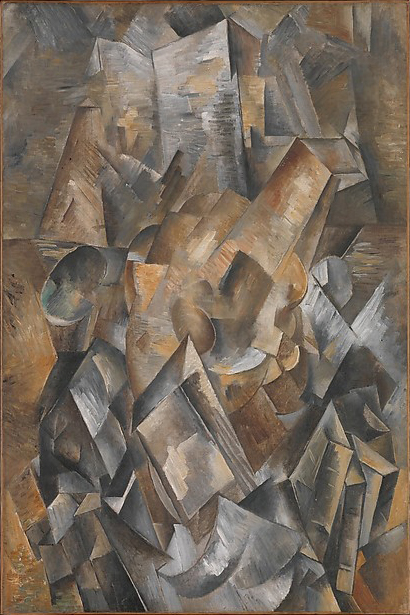
Art and architecture also played a major role in the development of the modernist movement. Cubism was an important movement in modern art, where images were fragmented and broken up into smaller shapes. Modernist architecture embraced new materials and technologies. One particularly celebrated example is the Narkomfin House in Moscow, a pioneering social housing project designed to promote communal living. The building included shared facilities such as a communal kitchen and dining room, reflecting the Soviet ideal of collective life, while reducing the importance of private domestic spaces.
In philosophy, Ludwig Wittgenstein and the Bloomsbury group made their debut during the modernist movement. Among them was John Maynard Keynes, whose ideas transformed economics and made him one of the most significant economic thinkers of the 20th century.